
Why should men learn healthy conflict?
Why Should Men — Exploring what helps men and others flourish.
See if this sounds familiar…
When disagreement arises at home or work, you either explode into heated arguments to force your point, or you retreat into silent stonewalling, walking out and shutting down for days. Neither response actually resolves the issue at hand.
Unmanaged conflict leaves a trail of damaged trust and unresolved resentment. Exploding creates fear, while retreating leaves wounds to fester beneath a polite surface. In both cases, the same recurring arguments repeat year after year, slowly eroding the foundation of your relationships and leaving you frustrated.
Healthy conflict is not about winning an argument or avoiding friction; it is about addressing real problems together without tearing down the person across from you. It requires staying in the room, keeping your tone calm, speaking truth directly, and seeking resolution rather than victory. Mastering disagreement turns friction into deeper understanding, completing your relational strength.
Stay seated during the next hard conversation and breathe through the urge to react. The door to clear, calm resolution is right in front of you.
Would you like some perspectives on this?
Be Part of the Answer
We haven't received any perspectives on this question yet.
You can help by sharing your own perspective, describing what you're going through, or subscribing to be notified when professionals respond.
We respect your privacy. We don't spam, sell, or share your email. You'll only receive notifications about this question, and you can unsubscribe at any time.
Recommended Reading
Books to deepen your understanding of this topic

Nonviolent Communication
This foundational framework teaches compassionate communication based on identifying core needs, observing without evaluating, and making clear requests. It is particularly relevant for understanding men who have been socialized to suppress emotions, giving them a non-judgmental vocabulary to express vulnerability without hostility.
Communication & Conflict
Crucial Conversations
This guide offers practical techniques for navigating high-stakes, emotionally charged conversations with clarity, safety, and mutual respect. It illuminates how men can move past defensive fight-or-flight responses during difficult discussions, enabling constructive problem-solving and stronger relational trust.
Communication & Conflict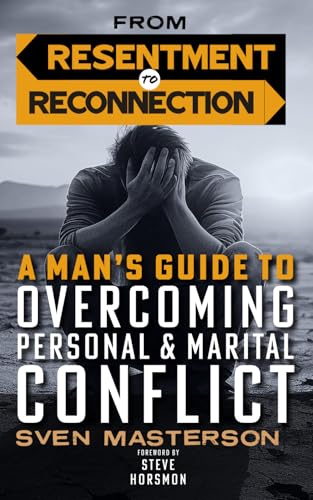
From Resentment to Reconnection
This guide offers men a practical path out of emotional isolation and marital discontent by tackling the root causes of male resentment. It reveals how men can transform internal frustration into healthy communication, personal accountability, and restored intimacy.
Communication & ConflictPeople also wonder
What are the benefits?
How does this affect relationships?
Where should a man begin?
What gets in the way?
Can this be learned later in life?
What changes when men do this?
This page is brought to you by the Why Platform — perspectives without algorithms.
Sponsor this content